1. Basic Information
| Dimension | Information |
|---|---|
| Project name | OpenMAIC,Open Multi-Agent Interactive Classroom |
| GitHub | THU-MAIC/OpenMAIC |
| Official Demo | open.maic.chat |
| Latest version | v0.3.1, published on 2026-07-21 |
| Primary | TypeScript |
| Next.js 16, React 19, TypeScript 5, LangGraph 1.1, Tailwind CSS 4 | |
| Open Source Protocol | The root project MIT is free of charge for commercial use. Built-in' mathml2omml' is a LGPL-3.0-or-later, and compliance needs to be paid attention to when distributing |
| Activity Signal | As of 2026-07-25,GitHub is about 20k stars, about 4k forks, and the latest push time is 2026-07-25 |
| Academic Background | JCST 2026 Paper: From MOOC to MAIC: Reimagine Online Teaching and Learning through LLM-driven Agents |
2 What does it do?
The core of the OpenMAIC is not to "help the teacher make a few pages of PPT", but to package the course content into a AI classroom that can be played, interacted, asked questions and exported. It splits the input into a classroom outline and generates multiple teaching scenarios, each of which can be slides, quizzes, interactive web pages, project-based learning tasks, and then organized by a multi-intelligent system to explain and discuss.
A typical process can be understood:
- The user enters a topic, or uploads courseware, PDF, audio and video and other learning materials.
- The system generates a structured curriculum outline.
- Each outline node further generates classroom scenes, including slides, quiz, interactive, and PBL.
- AI teachers and AI students to enter the classroom to explain, ask questions, discuss and whiteboard presentation.
- Students can ask real-time questions, participate in quizzes, adjust interactive simulations, or join project tasks in the classroom.
- Finally can export PPTX, interactive HTML, classroom ZIP, the latest version also supports optional MP4 video export.
It is more like a "AI-driven interactive teaching space" than a static content production tool.
3. Key Capabilities Teardown
3.1 a key to generate classroom
OpenMAIC support the generation of complete classes from topics or reference material. The system adopts two-stage pipeline:
| Phases | Role | Pre-Sales Explanable Ways |
|---|---|---|
| Outline Generation | Analyze Input Materials and Generate Course Structure | This is equivalent to letting AI do teaching design and chapter planning first |
| Scenario generation | Generate specific teaching content for each chapter | Equivalent to automatic generation of courseware, exercises, interactive experiments and classroom activities |
The most intuitive value to the customer is to shorten the course production cycle. The production of traditional courses requires the cooperation of teaching and research, courseware, fine arts, interactive development, dubbing and other roles. OpenMAIC can form a usable classroom prototype, and then teachers or teaching and research personnel can do secondary editing.
3.2 Multi-Agent Classroom
Project built-in AI teacher and multiple AI classmate roles. AI teachers are responsible for giving lectures, answering questions, and whiteboard presentations. AI students can participate in discussions, ask questions, and simulate different cognitive levels or opinions. Compared to a single chatbot, the multi-intelligent classroom is closer to the real classroom atmosphere:
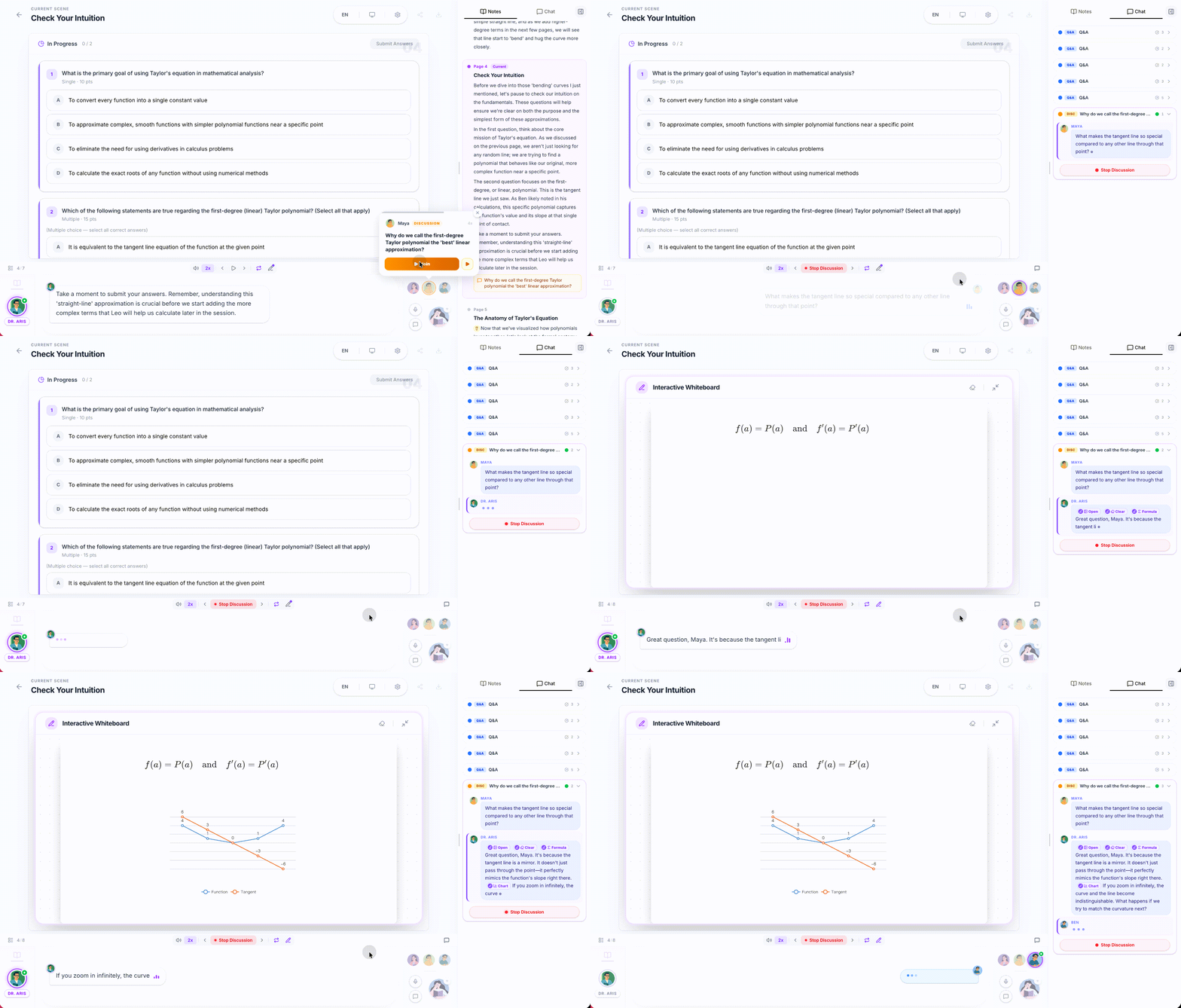
Three points can be emphasized when expressing pre-sales:
-For students: not a solitary question and answer, but a classroom rhythm, discussion and feedback.
-For teachers: Can quickly build a "demonstrable AI classroom" and lower the threshold for innovative teaching pilots.
-For institutions: can convert standard course content into interactive experiences that can be replicated, traced and demonstrated.
3.3 Classroom Components
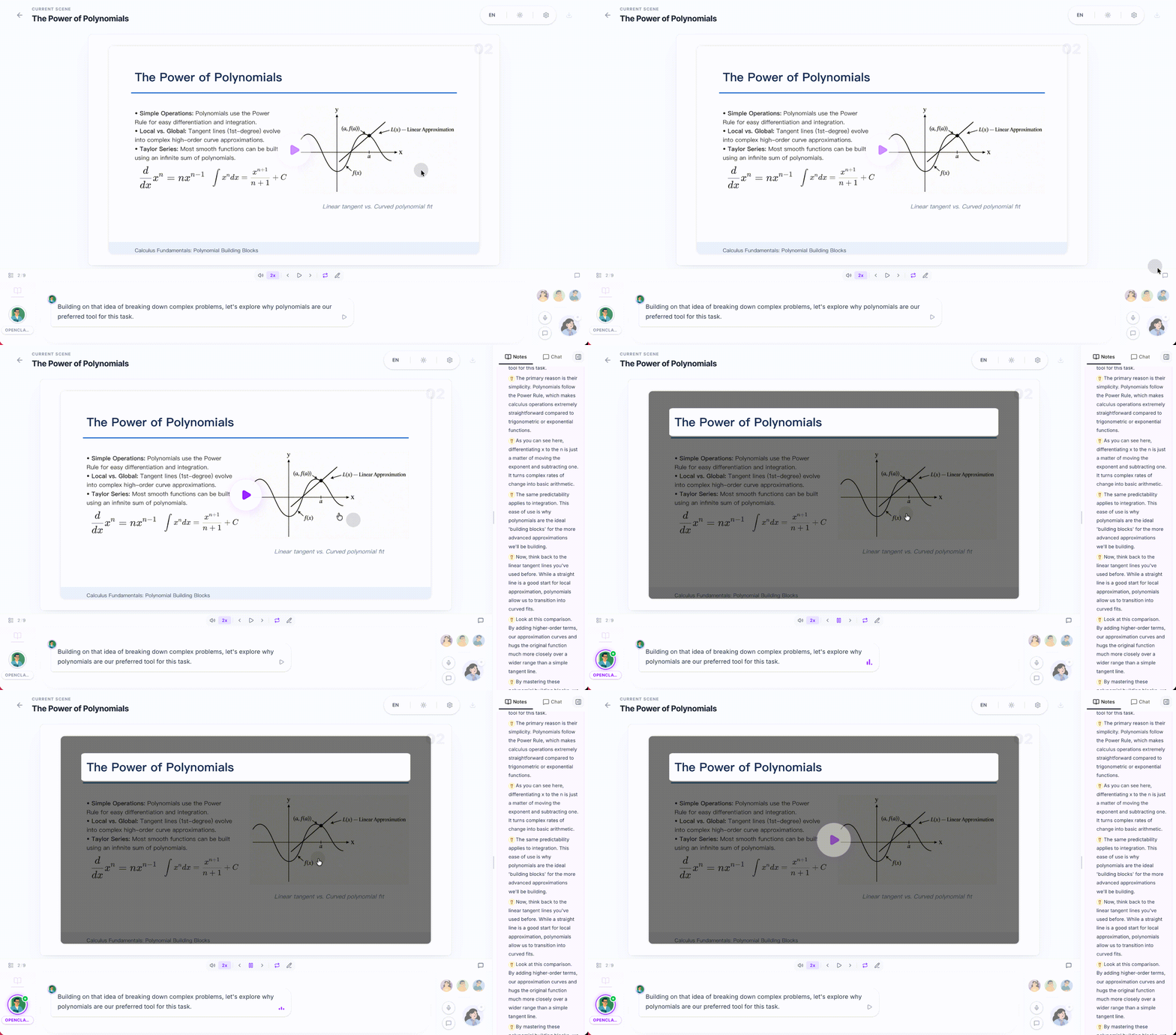
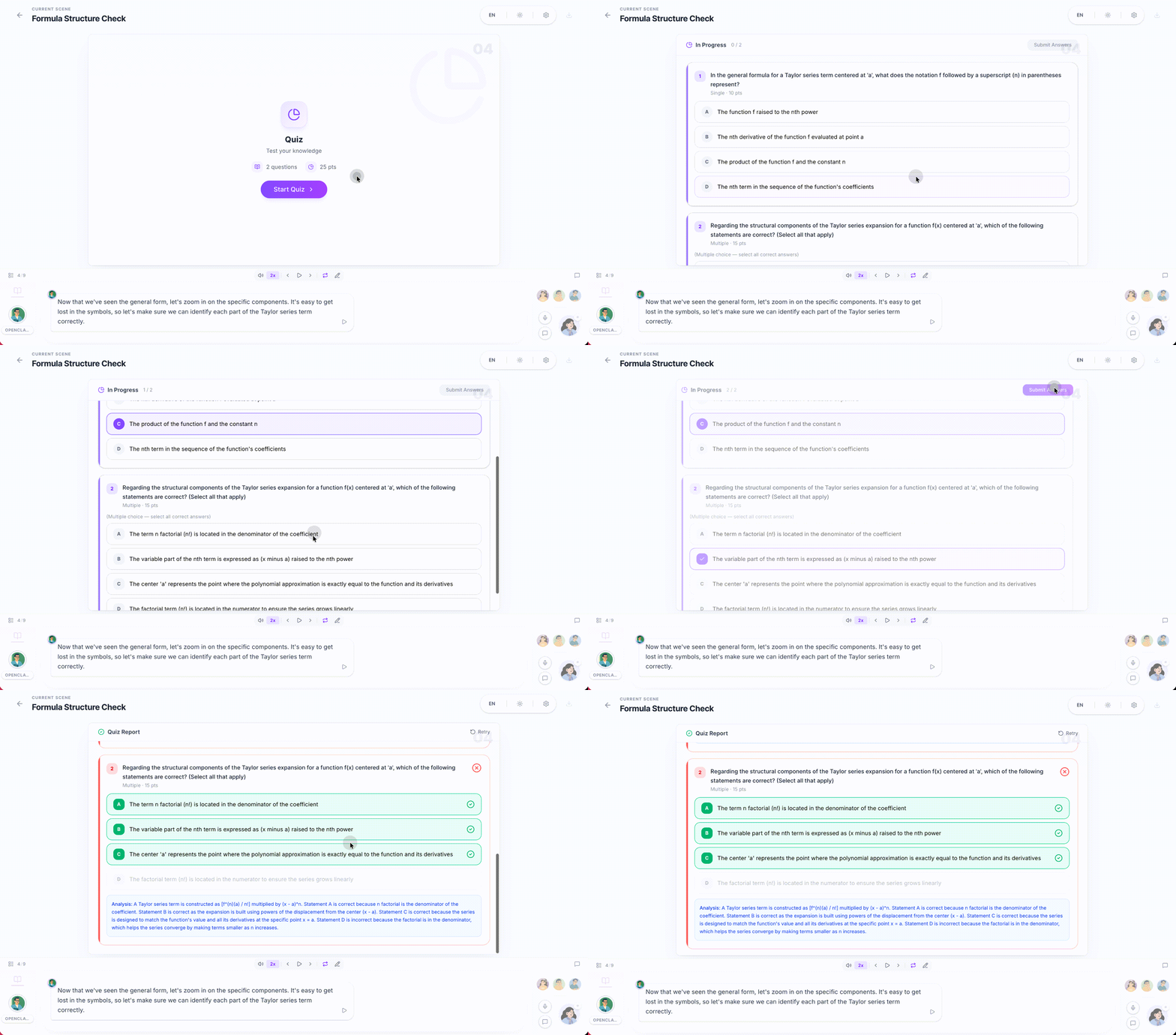
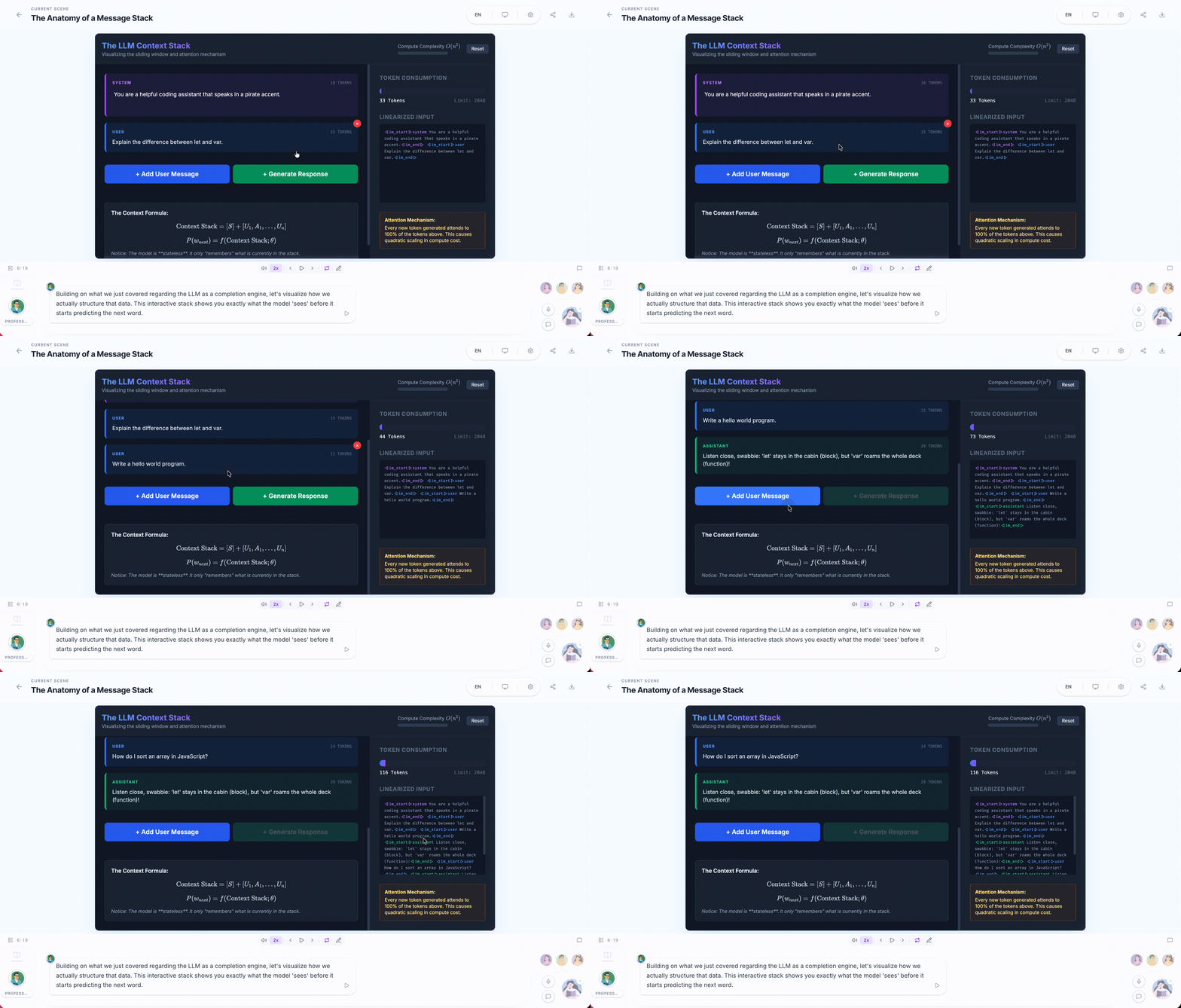
The OpenMAIC currently supports a variety of classroom components that are easiest for customers to understand during a presales presentation.
| Components | Abilities | Suitable for demonstrating speech skills |
|---|---|---|
| Slides | AI teachers cooperate with spotlights, laser pens and voice to explain | "upgrade traditional courseware to an AI classroom that can be explained and played back" |
| Quiz | Interactive tests such as single choice, multiple choice, short answer, etc. support AI scoring and feedback | "directly form a closed loop of practice, feedback and learning in class" |
| Interactive | HTML-based interactive simulation, flow chart, experiment, visualization | "not only look at knowledge, but also manually adjust parameters and see changes" |
| PBL | project-based learning, selecting roles and cooperating with AI to complete tasks | "suitable for vocational education, enterprise training and comprehensive practical courses" |
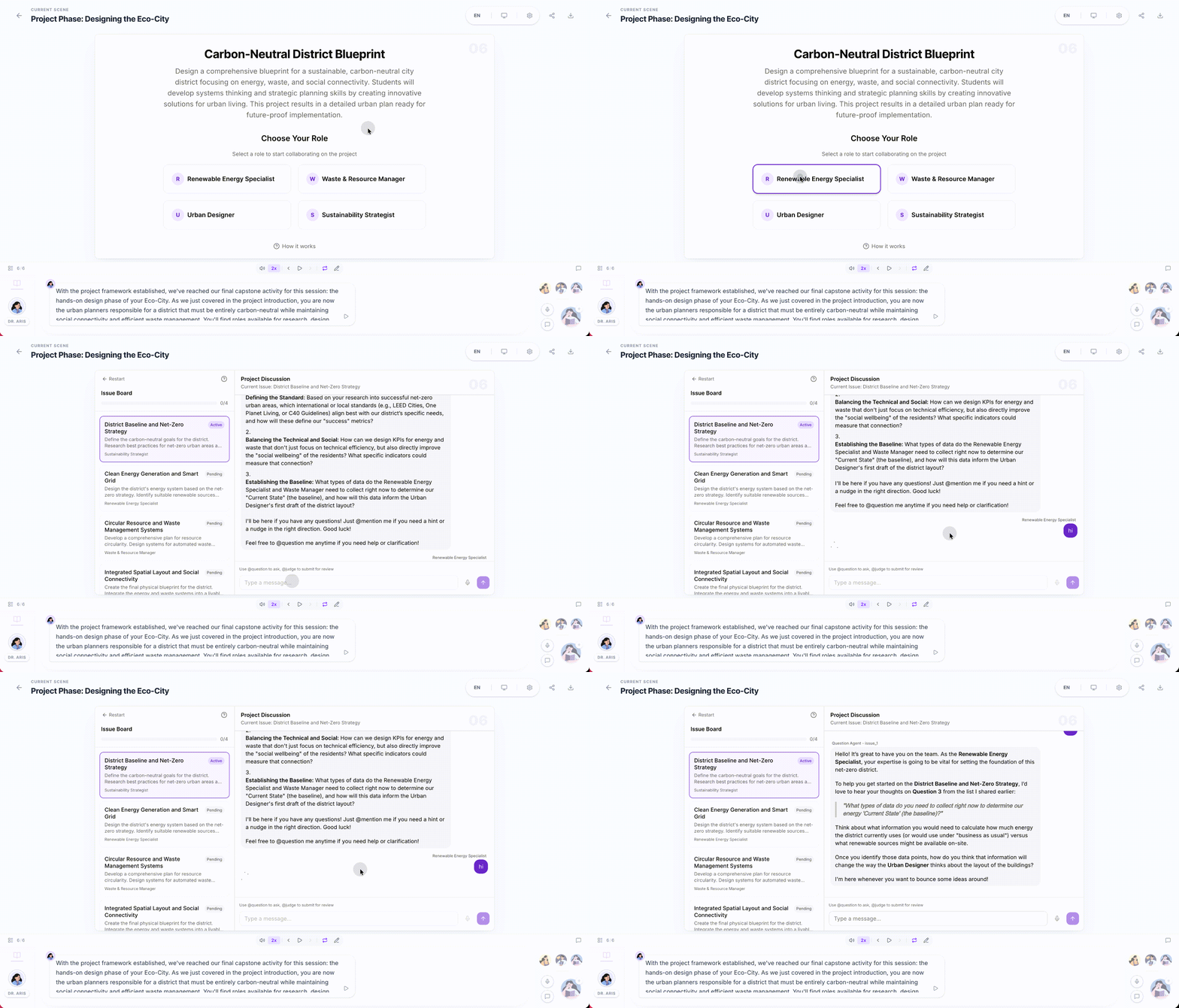
3.4 Deep Interaction Mode
OpenMAIC's "deep interaction mode" is an important selling point that distinguishes it from ordinary courseware generation tools. It can generate interactive interfaces such as 3D visualization, simulation experiments, games, mind maps, online programming, etc., and allows AI teachers to actively operate the interface to guide students to observe key points.
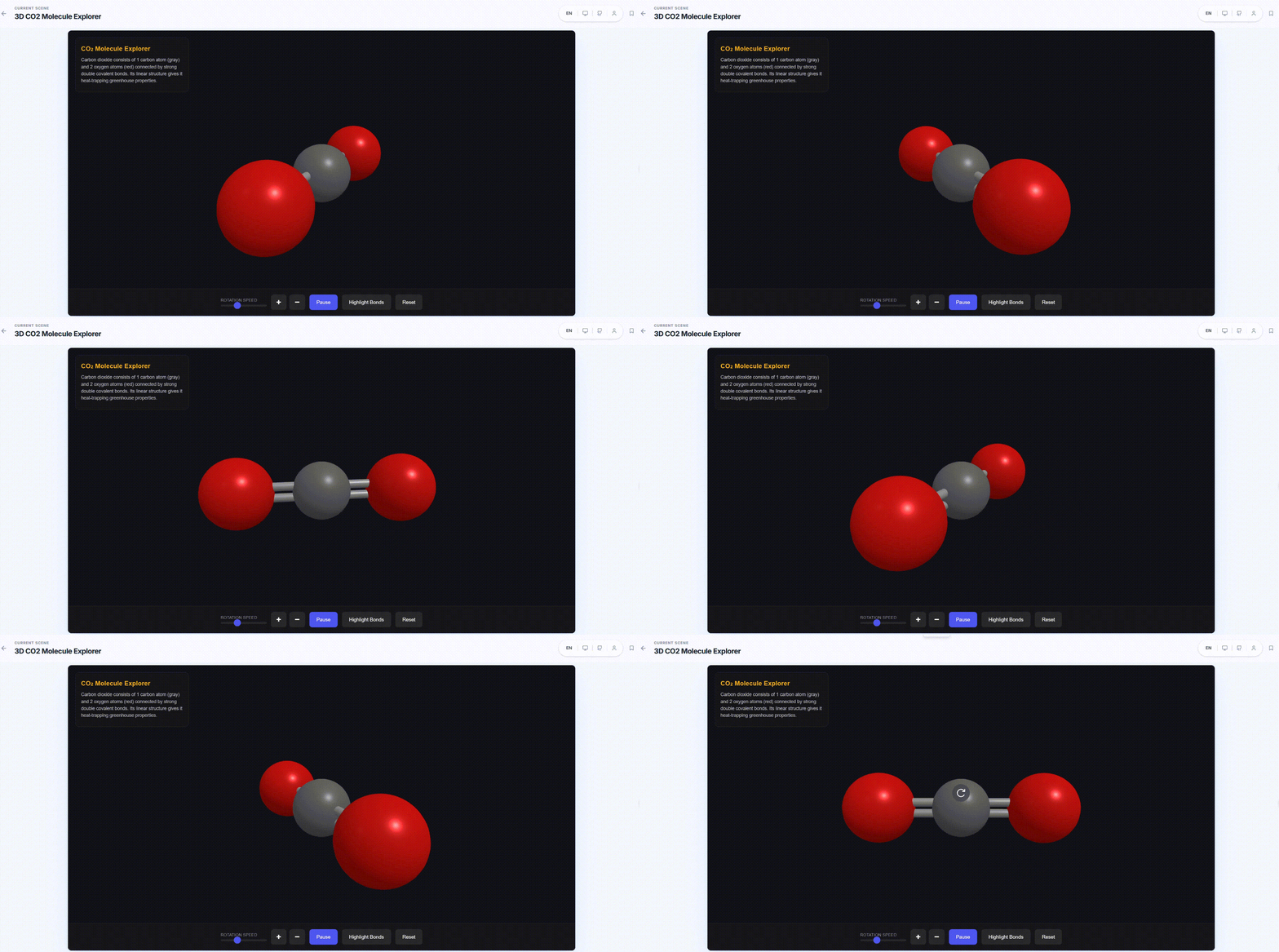
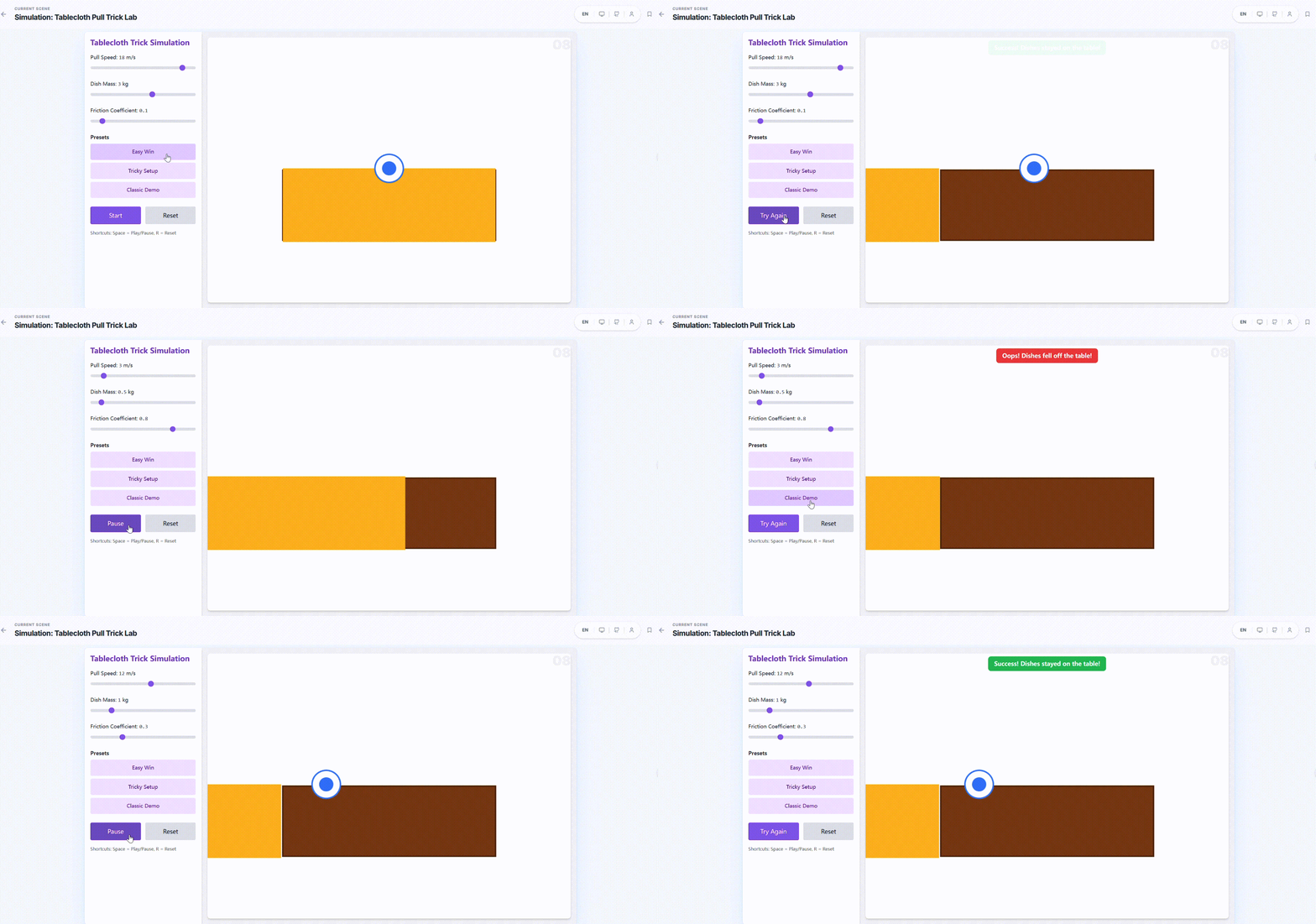
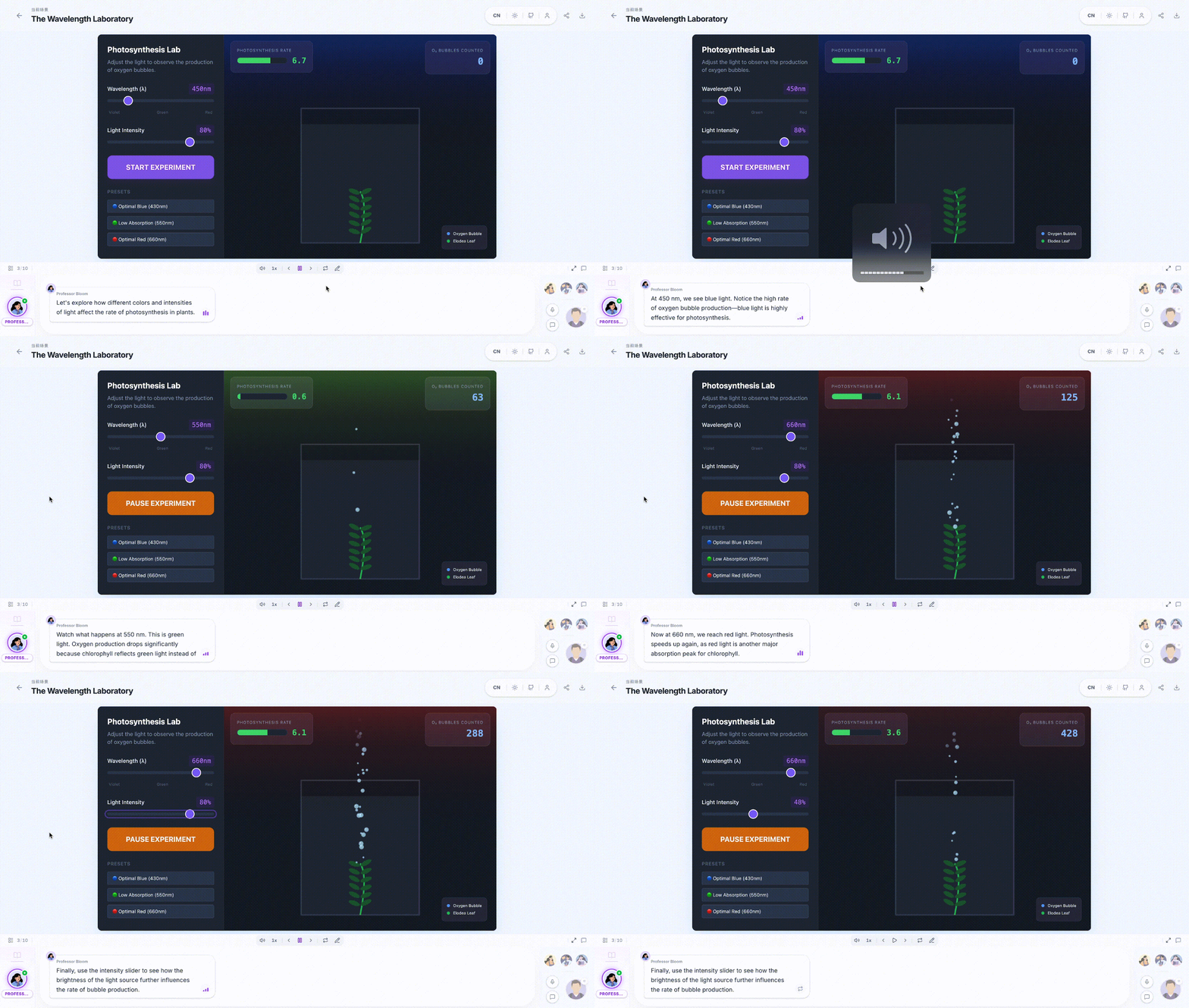
In the customer scenario, this is particularly suitable for explaining to K12 science classes, physical chemistry classes, programming education, vocational training, and product training customers. It takes "AI-generated content" one step further toward "AI-generated experiential learning activities".
3.5 voice, whiteboard and motion engines
OpenMAIC doesn't just generate text, it has an action engine and a playback engine. The README mentioned that the action engine supports 28 action types, including voice, whiteboard drawing, text, shape, chart, spotlight, laser pointer, etc. This means that the classroom can have an explanation rhythm when playing, rather than a screen of static content.
From a pre-sales perspective, this can be packaged as "AI instructor digitization":
-AI teachers can give lectures instead of just generating manuscripts.
-AI teachers can draw pictures, circle key points and deduce formulas.
-Classes can be replayed to form standardized teaching assets.
-If you access TTS and ASR, users can listen to lectures, ask questions and interact with voice.
3.6 export capability
The export capability of the OpenMAIC is relatively complete, suitable for moving from pilot to delivery.
| Export Format | Value |
|---|---|
| PPTX | for teachers to edit twice, easy to incorporate into the existing teaching process |
| Interactive HTML | Can be used as web courseware or embedded platform |
| Classroom ZIP | Preserve complete class structure and media for easy backup, migration, and sharing |
| MP4 | v0.3.1 adds optional capabilities, suitable for generating course videos, micro-course videos, and marketing samples |
MP4 export relies on an optional stand-alone render-service. It will compile the class as a Hyperframes project ZIP, and then render it as a video through the Chromium FFmpeg. This service is opt-in: when not configured, the application can still run, but the export will be downgraded to project ZIP.
4. Applicable Scenario
Curriculum Production for 4.1 Education Institutions
It is suitable for teaching and training institutions, K12 quality education and online education platform to quickly generate interactive course prototypes from course themes or teaching and research materials. Pre-sales focus can be on "reducing content production costs" and "improving course interactivity".
Speak customer benefits:
-The teacher can get the first draft by entering the topic, reducing the courseware production time from 0 to 1.
-The course is not just PPT, but includes quiz, interaction and explanation process.
-The teaching and research team can take the generated content as the first version, and then review and modify it.
4.2 Universities and Vocational Education
Colleges and vocational education pay more attention to the visualization and project practice of complex concepts. OpenMAIC interactive simulations, online programming and PBL are more attractive to such customers.
Applicable example:
-Python introductory lessons: build lectures, code exercises, quizzes.
-Physics/Engineering course: Generate 3D visualizations and simulations.
-Business Case Lesson: Generate a role-playing PBL.
-Medical, law, public management and other professional courses: through AI students to simulate different views or problems.
4.3 enterprise training and product training
The common pain points of enterprise training are many materials, fast update and fragmentation of employee time. OpenMAIC can turn internal documents, product manuals and SOPs into interactive courses.
Suitable scenarios:
-New employee orientation.
-Product knowledge training.
-Sales skills and competition training.
-Security compliance training.
-Internal system operation training.
Pre-sales can be described as "turning the corporate knowledge base into a AI training course that can be spoken, practiced and asked".
4.4 AI Teaching Innovation Laboratory
For schools, education bureaus, vocational education groups, publishing houses or educational technology companies, OpenMAIC can be used as a model for AI education innovation. Its multi-agent, interactive classroom, OpenClaw, MP4 export, privatization deployment and other capabilities are suitable for display projects, laboratory platforms or joint innovation PoC.
Lightweight Teaching Assistant in 4.5 Chat Application
The OpenMAIC has built-in OpenClaw skill, which supports classroom generation in chat applications such as flying books, Slack, Discord, Telegram, etc. This point is very valuable to enterprise customers, because employees or teachers are not necessarily willing to open a new system, and it is more natural to initiate generation directly in existing collaboration tools.
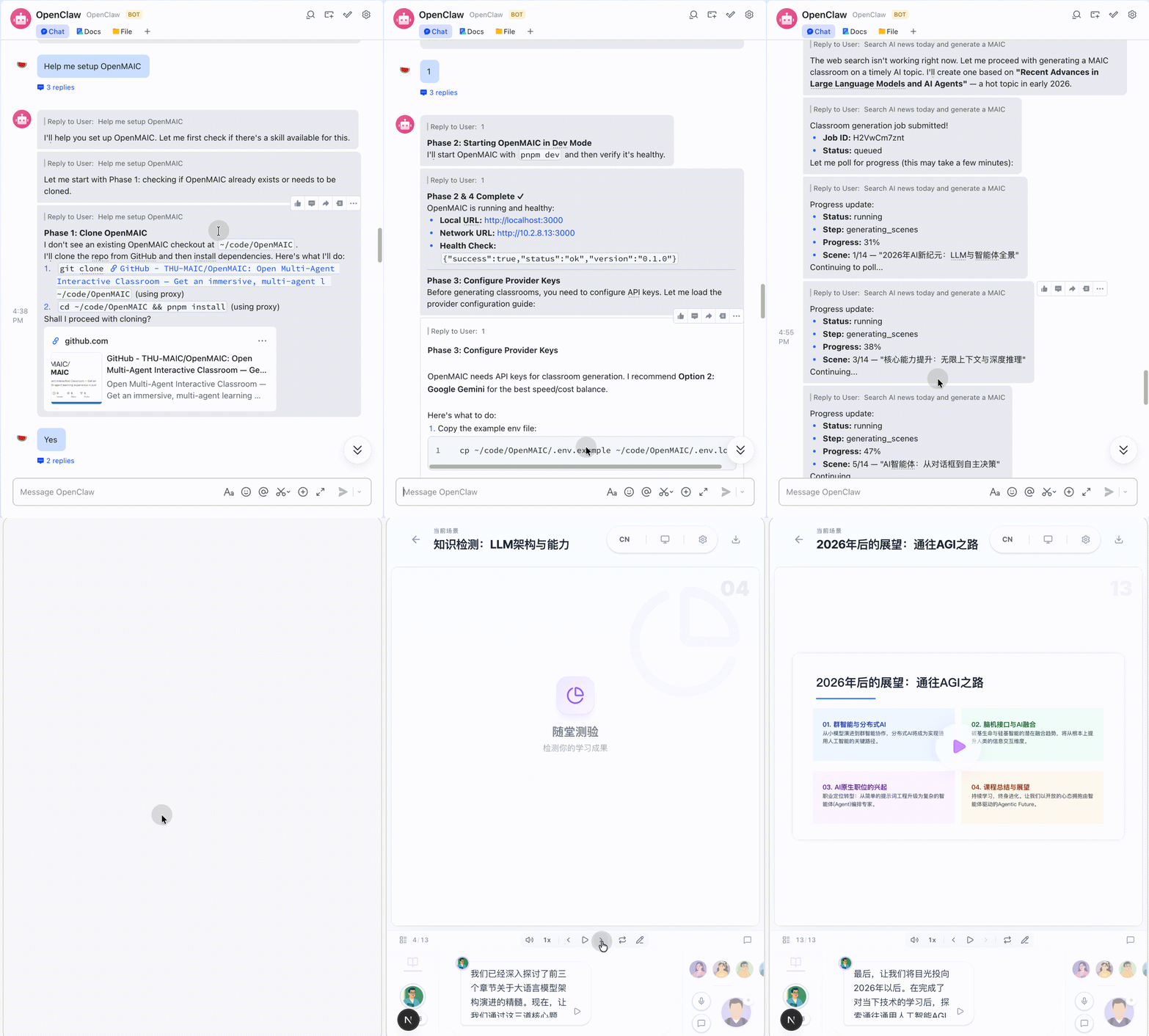
Can be packaged:
-"Send a sentence in a flying book to generate a training course"
-"Teachers send materials in groups, and AI automatically generate classroom links"
-"Pre-sales/training staff quickly generate product training demo in Slack"
5. Not suitable for the scene
Although the OpenMAIC is rich in capabilities, it cannot be said to be a universal LMS before sales.
| Not suitable for the scene | Reason |
|---|---|
| just want to do static PPT beautification | its advantage is in interactive classroom, simple PPT beautification will appear heavy |
| Requires mature LMS full set of abilities | The current focus is on generating and interacting classes, not a complete course selection, course arrangement, student status, examination and certificate system |
| Strong Compliance Test Scenarios | The content generated by the AI requires manual review and cannot be directly used for high-risk test questions |
| Strict data isolation and multi-tenant production system | v0.3.1 already has server-side storage reference implementation, but production-level authentication and tenant isolation still need to be completed by enterprise engineering |
| No model resource at all | At least one LLM provider needs to be configured; local models are available in Ollama/Lemonade, but quality and performance are to be verified separately |
| Need extremely stable commercial SLA | The project is very active, but it is still in the rapid evolution stage. Enterprise delivery needs to freeze the version and do secondary reinforcement |
6. Technical Architecture Understanding
The engineering structure given by README is relatively clear, and the core can be disassembled into four layers:
6.1 front-end and application layer
The project is a Next.js App Router application with React 19, Tailwind CSS 4, and shadcn/Radix components on the front end. The application includes home page generation entrance, classroom playback page, settings, chat, whiteboard, slide renderer, interactive scene renderer, etc.
6.2 AI Provider abstraction layer
The OpenMAIC supports a large number of model vendors, including OpenAI, Azure OpenAI, Anthropic, Google Gemini, DeepSeek, Qwen, Kimi, MiniMax, Grok, OpenRouter, Bean Bag, Tencent Miyuan, IQ GLM, Ollama, Lemonade, and OpenAI-compatible APIs.
Pre-sales value is more flexible in model selection:
-Overseas customers can use OpenAI, Anthropic, Gemini.
-Domestic customers can use Tongyi, DeepSeek, Kimi, Doubao, Zhipu, etc.
-Private or offline inclined customers can try Ollama, Lemonade, local TTS/ASR.
6.3 Multi-Agent Orchestration
The project uses LangGraph to do multi-agent state machines to manage rounds, discussions, and Q & A in the classroom. This architecture is more suitable for classroom scenarios than simple prompt chain, because the classroom itself has roles, phases, actions, contexts, and states.
The technical customer can be explained as follows:
-LangGraph are responsible for "who says what and when and what".
-The playback engine is responsible for the classroom playback state.
-The action engine is responsible for putting agent actions on the interface, such as whiteboard, laser pointer, spotlight, voice.
6.4 storage and runtime
v0.3.1 adds server-backed runtime storage, including '@ openmaic/storage', DocumentStore, RuntimeStore, HTTP backend contract, and PostgreSQL reference services. This shows that the project is evolving from a pure front-end/local state to a deployable and persistent classroom runtime.
However, the boundary should be clearly explained to the customer here: README clearly reminds the persistent token, 'NEXT_PUBLIC_PERSISTENCE_TOKEN will enter the front-end JS bundle, not the real user isolation key. In the production environment, the server authentication logic must be replaced, and the real session and server identity must be used to divide the learner partition.
6.5 MP4 Rendering Service
MP4 exports are powered by standalone render-service and run in Node 22, Chromium and FFmpeg environments. It accepts class project ZIP, renders asynchronously to MP4, provides submit, poll, download, cancel, and health check APIs. The service limits and isolates ZIP bomb, concurrency, task TTL, upload size, network export, etc.
This capability is suitable for course video production, but resources should be planned independently when deploying in production, because video rendering is a heavy task.
7. How to deploy and use
7.1 Local Quick Start
git clone https://github.com/THU-MAIC/OpenMAIC.git
cd OpenMAIC
pnpm install
cp .env.example .env.local
pnpm dev
Environmental requirements:
-Node.js >= 20.9.0
-pnpm >= 10
After open' http:// localhost:3000 ', configure at least one LLM API Key to start generating classes.
7.2 production build
pnpm build
pnpm start
7.3 Vercel deployment
The project provides a one-click Vercel deployment entry. Suitable for public network demo, pre-sales template and lightweight trial environment. At least one model vendor API Key must be configured during deployment, and we recommend that you configure the ACCESS_CODE for site-level access protection.
7.4 Docker deployment
cp .env.example .env.local
docker compose up --build
If you want to enable server-side persistence, you can use the 'server-persistence' profile and configure the PostgreSQL connection and persistence switches.
If you want to enable MP4 export, you can use:
docker compose --profile video-export up --build7.5 Document Parsing Enhancements
The project supports MinerU to enhance PDF/document parsing, and also supports document parsing capabilities such as Alibaba DocMind. For education clients, this section is critical because real course materials often contain formulas, tables, scans, pictures and complex typography.
7.6 voice ability
OpenMAIC supports multiple TTS/ASR provider, and also supports VoxCPM2 self-hosted TTS and tone clones.

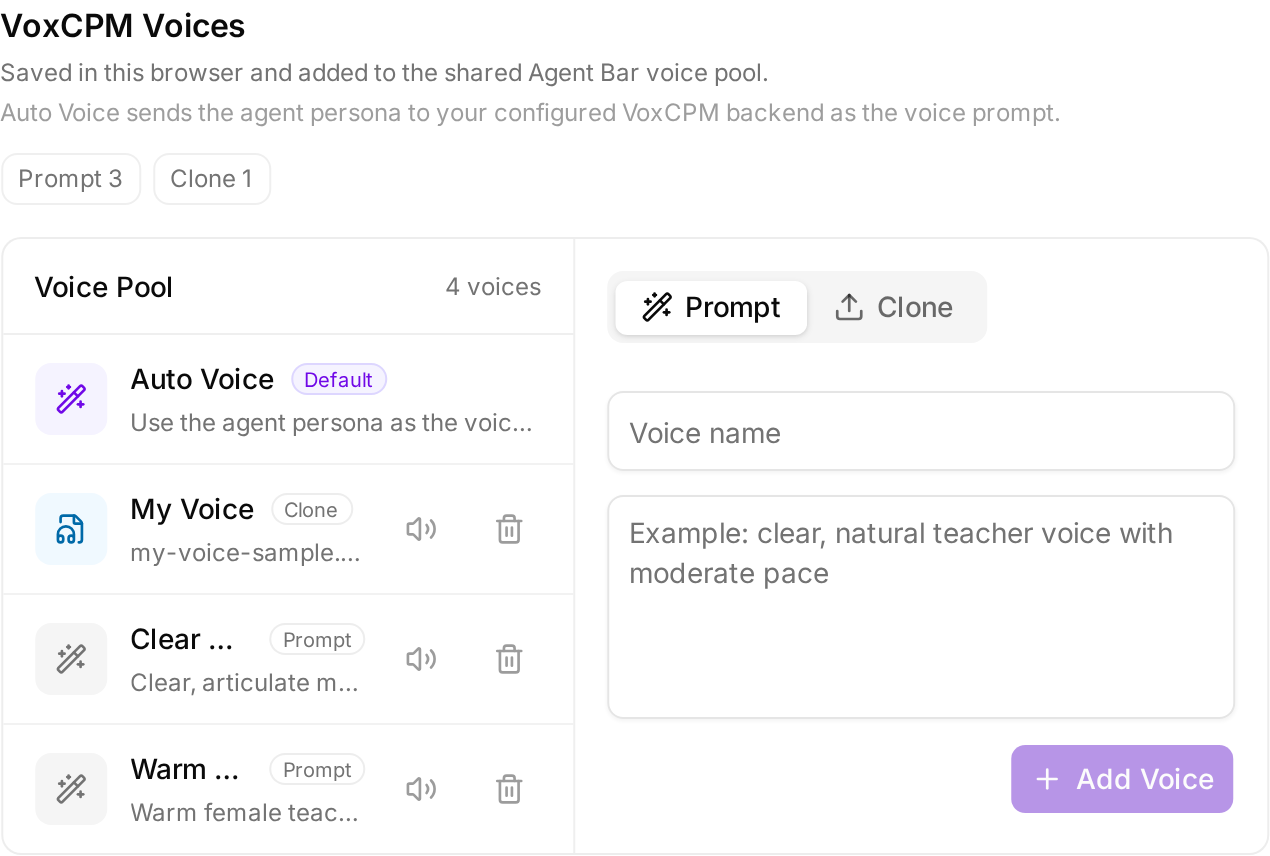
This is very attractive for educational products, because the "voice" will significantly enhance the classroom immersion. However, customers should be reminded before sales that voice cloning involves authorization, privacy and compliance, and the authorization process needs to be clear before going online.
8. Pre-sales value refining
8.1 can be the main value proposition
| Value Proposition | Object Oriented | Explain |
|---|---|---|
| From content to classroom | Educational institutions, corporate training | Generate not just text, but playable and interactive classrooms |
| AI teachers AI classmates | schools, innovation laboratories | simulated classroom atmosphere, more teaching sense than a single question and answer |
| interactive learning | K12, vocational education, colleges and universities | 3D, simulation, games, programming, PBL is more suitable for complex knowledge |
| Multi-model adaptation | IT, procurement, compliance | Domestic and foreign or local models can be selected according to customer model ecology |
| can be exported and precipitated | teaching and research, training departments | PPTX, HTML, ZIP, MP4 easy to enter the existing workflow |
| Can be privatized | Enterprise, Education Bureau, Group School | Docker, Postgres, local model and local voice provide engineering foundation |
The difference between 8.2 and ordinary courseware generation tools
Ordinary courseware generation tools usually stay in "output several pages of PPT". The OpenMAIC differences are:
-There are classroom roles: AI teacher, AI student, discussion member.
-There are classroom actions: lecture, whiteboard, spotlight, laser pointer.
-There are interactive scenes: quizzes, experiments, games, programming, PBL.
-There is runtime status: classroom playback, real-time question and answer, learning process record.
-There are export links: PPTX, HTML, ZIP, MP4.
a word sales expression:
"if the customer only needs PPT generation, the OpenMAIC is not the lightest; If the customer wants to do AI interactive class, it is closer to the complete experience than the ordinary PPT generator."
Difference between 8.3 and LMS
OpenMAIC not Moodle, Canvas, rain classroom this kind of LMS. It is more like the "intelligent course production and interactive experience layer" in front of the LMS ".
More accurate positioning:
-LMS is responsible for users, classes, courses, exams, grades, certificates.
-OpenMAIC are responsible for turning knowledge materials into interactive classes.
-When an enterprise lands, the OpenMAIC can be embedded into the existing learning platform as a course generation and classroom playback module.
9. Customer Communication
9.1 for Heads of Educational Institutions
"OpenMAIC can quickly generate a course prototype with AI teacher explanations, quizzes, and interactive experiments from the teacher's existing handouts, textbook snippets, or course topics. Instead of starting a class with a blank PPT, the teaching and research team can review and optimize the AI-generated results as a first draft. It is more suitable for interactive classes, experience classes, and standardized course assets."
9.2 for college/vocational teachers
"For abstract concepts, it is difficult for students to understand just by looking at PPT. OpenMAIC can generate 3D visualization, simulation experiments, online programming and project-based tasks for students to operate, observe and ask questions in the classroom. AI teachers can also actively highlight the interface and draw diagrams to help teachers speak complex knowledge more intuitively."
9.3 for enterprise training person in charge
"There are a lot of documents and SOPs in the enterprise, but it is difficult for employees to learn them systematically. OpenMAIC can turn the documents into interactive training sessions, add quizzes, project tasks and AI Q & A, and export them to HTML, PPT or video for easy reuse to the enterprise training platform."
9.4 for IT/Architecture Owner
"OpenMAIC is the Next.js TypeScript project, which supports Docker, Vercel and PostgreSQL reference persistence, as well as multi-model vendors and OpenAI-compatible interfaces. When landing in production, you need to focus on authentication, multi-tenant isolation, auditing, security policies and model gateways."
10. PoC Recommendations
10.1 PoC Target
It is suggested not to set PoC as "verifying whether courseware can be generated", which is too shallow. A better goal is to validate:
-Can you generate real materials from customers into usable classes.
-Generate content that meets the syllabus and client style.
-Whether the interactive scene improves understanding and engagement.
-Whether the teacher/trainer can edit and reuse the generated results.
-Privatization deployment, model access, and data security are controllable.
510.00g Week PoC Design
| Phase | Time | Task | Output |
|---|---|---|---|
| Preparation | Day 1-2 | Select 3 real course materials, configure the model and test environment | PoC input materials, operating environment |
| Generate | Days 3-5 | Generate slides, quiz, interactive, PBL | 3 sets of classroom samples respectively |
| Review | Days 6-8 | Director of Teaching and Research/Training Review Content Quality | List of Issues, Suggestions for Revision |
| Integration | Days 9-11 | Test Export PPTX/HTML/ZIP/MP4, Verify Embedding Existing Platform | Export Sample and Integration Scenario |
| Report | Days 12-14 | Summarize efficiency improvement, experience effect and deployment risk | PoC report materials |
10.3 PoC Success Indicators
| Indicator | Suggested measurement method |
|---|---|
| Generation time of the first draft of the course | Comparison with manual production time of the first draft of the course |
| Content Availability Rate | The proportion of teaching and research personnel marked "Can be directly retained/Need to be modified/Not available" |
| Interactive Effectiveness | Feedback from students or trial users completing quizzes, interactive experiments |
| Editing cost | Time required for teacher to modify the generated course twice |
| Deployment Feasibility | Whether the model, document parsing, TTS, storage, and export links run through |
| Compliance and Controllability | Whether the data is localizable, whether the content is auditable, and whether the voice clone is authorized |
11. Risks and Precautions
11.1 Content Accuracy Risk
AI generation courses may have hallucinations, missing knowledge points, example errors, formula errors or unreasonable teaching order. Pre-sales cannot promise to "automatically generate and go online". A more reasonable statement is to "manually review and publish the first draft of AI generation".
11.2 production-level permissions and multi-tenancy
README explicitly reminds that persistent tokens are not production-level security isolation. When deploying for enterprises or education bureaus, it is necessary to complete:
-User login and SSO.
-Tenant, school, class, course permissions.
-Server session verification.
-API Key isolation and expense control.
-Audit log and content publishing process.
11.3 Models and Costs
High-quality classroom generation usually calls multiple services such as LLM, image generation, TTS, ASR, document parsing, search, etc. The cost is not just a model API Key. PoC phase to be counted:
-Generate consumption token in a single class.
-Picture, voice, video export cost.
-And the speed and failure rate at which it occurs.
-Quality difference after domestic/overseas model switching.
11.4 video export resources
MP4 rendering needs to Chromium FFmpeg, and the resource consumption is significantly higher than that of ordinary Web applications. Customers who want to generate video courses in batches need to plan separately for rendering queues, task timeouts, concurrency, object storage, and download links.
11.5 open source protocols and third-party components
The root project is MIT, commercial friendly. However, the built-in 'packages/mathml2omml' in the warehouse is LGPL-3.0-or-later, and the legal or open source compliance colleagues need to confirm the usage method when redistributing the whole.
Version Risk of Rapid 11.6 Evolution
OpenMAIC current updates are very fast and feature iterations are aggressive, but it also means that interfaces, data structures, and deployment methods may change. Pre-sales PoC can follow the latest version, formally deliver recommended frozen versions, establish patch policies, and write automated tests for key functions.
12. Match judgment with customer needs
Highly matched customers
-There is already course content, but there is a lack of interaction and digital expression.
-Hope to use AI to reduce the production cost of teaching and research or training content.
-There are AI education innovation display, demonstration school, laboratory, wisdom education project needs.
-Want to do the transformation of enterprise knowledge base to training courses.
-Can accept the content production mode of "AI generation manual review.
-There is a certain technical team to support privatization deployment and secondary development.
Medium Match Customer
-Just want to do courseware generation, but may expand interactive teaching in the future.
-Existing LMS, requires a AI course generation module.
-I want to do demo or innovation demonstration first, but I haven't determined the long-term operation mode yet.
Low Match Customer
-Only need mature question bank, examination, certificate, credit management.
-Cannot accept any AI to generate content uncertainty.
-No model budget and no local model resources.
-Requires out-of-the-box enterprise-class permissions, multi-tenancy and SLAs.
13. The direction of a packable solution
13.1 "AI Interactive Course Factory"
Input the customer's existing teaching materials, lecture notes, PPT, PDF and video materials into the system to generate standardized interactive course assets. Suitable for educational institutions, publishing houses, corporate universities.
Core Delivery:
-Course generation workbench.
-Teaching and research review editing process.
-Interactive classroom player.
-PPTX/HTML/Video export.
13.2 "Enterprise Knowledge Base to Training Course"
For internal training, turn product documents, SOP and system documents into interactive training courses. Suitable for sales training, customer service training, compliance training, new employee training.
Core Delivery:
-Document parsing and knowledge extraction.
-AI training class generation.
-Quiz and feedback.
-Integration with enterprise LMS or knowledge base.
13.3 "AI Education Innovation Laboratory"
For schools, education bureau, colleges and universities, vocational education group, do AI education innovation display platform. Highlights are multi-agent classrooms, interactive experiments, AI teachers, real-time questions and answers, and learning data.
Core Delivery:
-Model courses.
-Multi-agent classroom experience.
-Interactive experiment sample.
-Private model/domestic model adaptation.
13.4 "Flying Book/Course Generation Assistant in Slack"
Use OpenClaw integration to embed classroom generation into common customer chat tools. Suitable for corporate training team and teacher community.
Core Delivery:
-Chat app trigger generation.
-Classroom link back.
-Hosted or local OpenMAIC services.
-Permission and access code control.
14. Competition/Substitute Perspective
OpenMAIC competition is not a single category, customers will compare it with several types of products:
| Category | Customer may compare | OpenMAIC strengths | OpenMAIC weaknesses | |||||||||||||||||||||||||||||||||||||||||||||||||||||||||||||||||||||||||||||||||||||||||||||||||||||||||||||||||||||||||
|---|---|---|---|---|---|---|---|---|---|---|---|---|---|---|---|---|---|---|---|---|---|---|---|---|---|---|---|---|---|---|---|---|---|---|---|---|---|---|---|---|---|---|---|---|---|---|---|---|---|---|---|---|---|---|---|---|---|---|---|---|---|---|---|---|---|---|---|---|---|---|---|---|---|---|---|---|---|---|---|---|---|---|---|---|---|---|---|---|---|---|---|---|---|---|---|---|---|---|---|---|---|---|---|---|---|---|---|---|---|---|---|---|---|---|---|---|---|---|---|---|---|---|---|---|
| PPT/Courseware Generation Tool | Gamma, Canva, Tome, Various AI PPT | More Emphasis on Classroom Interaction, Multi-Agent and Exporting Classroom | Design Template and Business Maturity May Not Be as Good as Professional PPT Tool | |||||||||||||||||||||||||||||||||||||||||||||||||||||||||||||||||||||||||||||||||||||||||||||||||||||||||||||||||||||||||
| AI Tutor | Khanmigo, all kinds of AI tutoring/accompanying training | can generate complete classroom and visual activities | personalized long-term learning portrait needs to be completed | |||||||||||||||||||||||||||||||||||||||||||||||||||||||||||||||||||||||||||||||||||||||||||||||||||||||||||||||||||||||||
| Low-code interactive courseware | H5P, interactive courseware platform | Automatic AI generation, low threshold | Refined interactive development and stable template ecology may be insufficient | |||||||||||||||||||||||||||||||||||||||||||||||||||||||||||||||||||||||||||||||||||||||||||||||||||||||||||||||||||||||||
| Enterprise Knowledge Base Q & A | Dify, RAG Platform, Intelligent Customer Service | Can convert knowledge into courses, not just Q & A | Knowledge retrieval and authority system need to be completed according to enterprise system |
Pre-sales positioning advice: don't talk about OpenMAIC as "replacing LMS", but as "AI interactive course generation and playback engine", which is easier to complement the customer's existing system.
15. Landing-oriented technical transformation list
If you want to use OpenMAIC in real projects, it is recommended to evaluate these modifications in advance:
| Module | Retrofit Direction |
|---|---|
| Authentication permission | Access to enterprise SSO, unified school identity, course permission, tenant isolation |
| Model Gateway | Unified management of LLM, TTS, ASR, image, video, search provider |
| Content Review | Add teaching and research review, version release, sensitive words and knowledge accuracy check |
| Storage | PostgreSQL, Object Storage, and Classroom Asset Version Management |
| Cost Control | token budget, concurrency limit, user quota, call log |
| Export | PPTX template customization, HTML embedding LMS, video rendering queue |
| Data Security | Document Desensitization, Private Deployment, Network Isolation, Audit Logs |
| Operations Management | Course Library, Tag, Search, Course Copy, Template Management |
| Learning Data | Learning Progress, Quiz Results, Interaction Records, Reports |
| Observability | Generation failure rate, time consumption, model call error, rendering task status |
16. Presales Script Suggestions
Demo 1: Generate Classes from Topics
Enter a topic that is familiar to the customer, such as "How do new employees understand the company's product line" or "Elementary school students understand circuit basics in 30 minutes". Demonstrate the generation process from topic to outline to classroom scene.
Focus on:
-AI is not just writing content, but doing teaching design.
-Generate results with presentations, interactions and quizzes.
-Teacher can continue to edit and export.
Demo 2: Generate Training Lesson from Customer Documents
Upload a real PDF or product manual from the customer to generate a training class.
Focus on:
-Turn sleeping documents into learnable content.
-Employees not only read documents, but can listen, answer questions and ask questions.
-Content can be exported to existing training platforms.
Demo 3: Deep Interaction Mode
Show 3D, simulation experiments or online programming.
Focus on:
-Abstract knowledge can be visualized.
-Students understand knowledge through operations.
-AI teachers can take the initiative to operate the interface to guide.
Demo 4: Export and Integration
Show PPTX, HTML, ZIP, or MP4 export.
Focus on:
-The generated classroom is not a one-time demo and can enter the customer's production process.
-HTML/ZIP is suitable for embedding in intranet systems.
-MP4 is suitable for micro-lesson videos and marketing samples.
17. Recommended Pre-Sales Conclusions
OpenMAIC is worth focusing on. Its highlight is not "another AI PPT generator", but the combination of course production, classroom roles, interactive scenes, whiteboard actions, voice explanation and export precipitation to form a more complete prototype of AI interactive classroom. It is especially suitable for educational AI innovation projects, enterprise training content production, curriculum interactive transformation and privatization PoC.
But in real commercial delivery, it needs to be delivered as an open source foundation capability, rather than a complete product. The pre-sales phase should focus on verifying the quality of course generation, customer material adaptation, interactive experience, model cost, and privatization security boundaries. If the customer is willing to do secondary development and platform integration, the OpenMAIC engineering foundation and MIT protocol will be more friendly. If the customer needs a mature LMS or strong compliance examination system, the OpenMAIC should be placed in the position of "course generation and interactive experience module.
18. REFERENCE
-GitHub repository:THU-MAIC/OpenMAIC
-Official Demo:open.maic.chat
-Latest Release:v0.3.1
-Paper page:From MOOC to MAIC: Reimagine Online Teaching and Learning through LLM-driven Agents
-OpenClaw:openclaw/openclaw
-MinerU:opendatalab/MinerU
-VoxCPM:OpenBMB/VoxCPM